
A Moody Forest Green Wedding at Night With Ferns and White Daisies11 min read
✨ The concept imagery in this post was created with AI tools, guided by my event-design direction. Full details in my Disclosures.
This post may contain affiliate links, which means I may earn a small commission if you purchase through them — at no extra cost to you. See my Disclosures for details.
Some weddings glow. This one smolders. Picture a reception that begins after dark, where the walls read almost black, the greenery climbs everywhere, and hundreds of tiny white daisies float through it like scattered light. The palette sits in one narrow band of deep green — forest green, hunter green, moss, and near-charcoal — warmed only by candlelight and strings of overhead bulbs. I created these images using AI to explore a nighttime indoor wedding that feels like a forest after sundown, and the result turned out moodier and softer than I expected.
What makes this concept work is the tension between two opposite instincts. The room is dark, dense, and dramatic. Meanwhile the florals are almost innocent — Boston ferns, trailing foliage, and an absolute overload of small white daisies. That contrast is the whole design. Without the daisies, this would read heavy and masculine. Without the darkness, the daisies would look like a garden party.
Venue Context: Why a Dark Blank-Slate Space Wins Here
This design wants a big room that can disappear. In the wide shots you can just make out structural pillars and a high ceiling, but the architecture never announces itself. That is exactly the point. A blank-slate venue, industrial warehouse, or unadorned ballroom lets you build the forest rather than fight the existing decor.
From a design perspective, dark venues are far more forgiving than they get credit for. Because the walls recede, every lit element becomes a focal point automatically. However, this only works if you commit to the darkness. Half-lighting a big room reads as a lighting failure rather than a mood.
- Look for venues that let you control the house lights completely. A space you cannot dim will undo this entire concept.
- Blank-slate venues, lofts, and converted warehouses cost less than ornate ballrooms and suit this look better.
- Ask about rigging points early. The overhead greenery and string lights need somewhere to hang from.
With the room established, the ceremony is where the palette introduces itself.
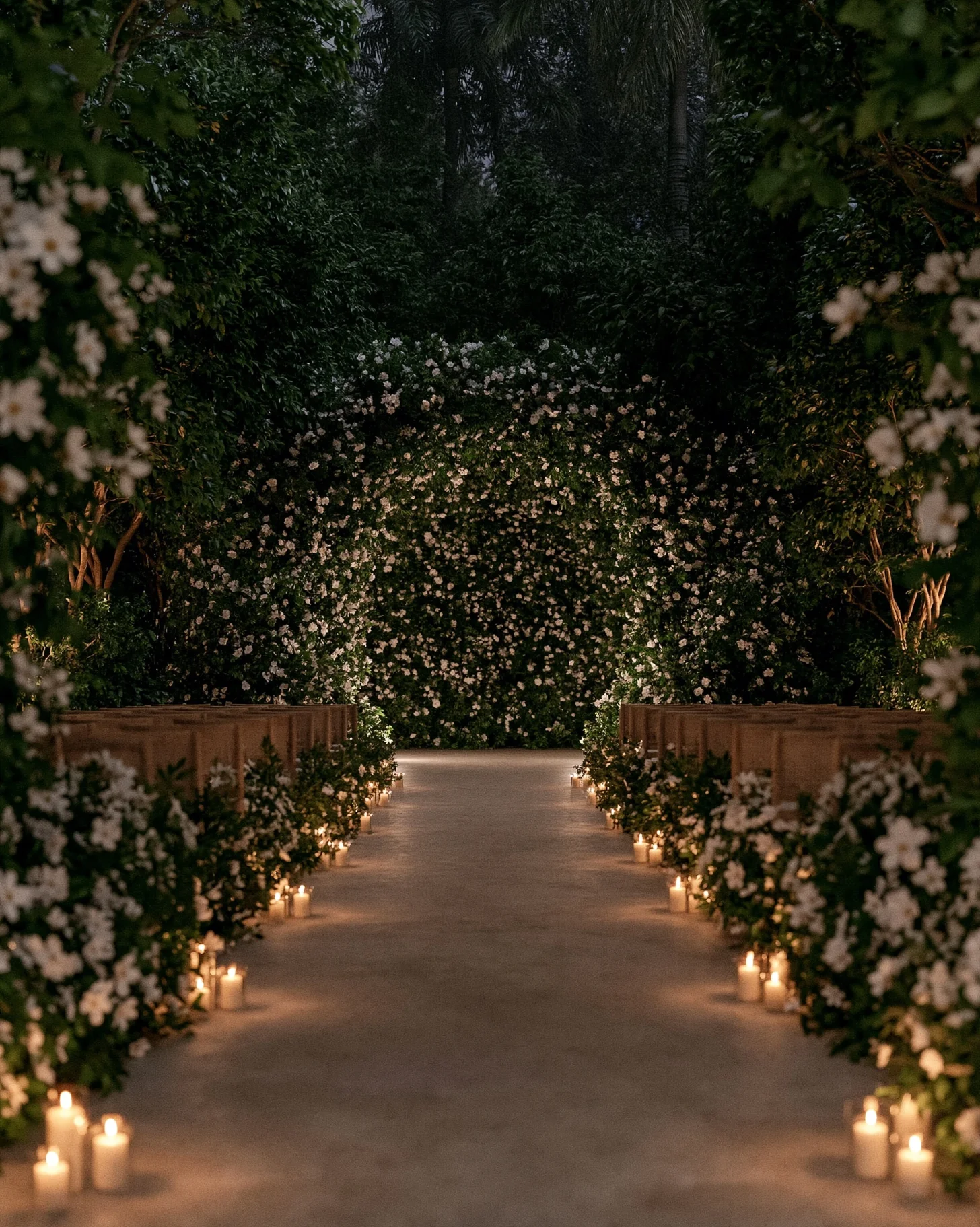
Ceremony: A Fern and Daisy Altar That Reads From the Back Row
The ceremony sets up the whole visual language in one frame. A dense installation of ferns and foliage frames the altar, studded throughout with small white daisies. Rows of dark chairs run down a center aisle, and the lighting stays low and warm. As a result, the couple is the brightest thing in the room.
This is smart sightline design. Dark greenery absorbs an enormous amount of light, so the white florals are doing structural work here, not just decorative work. They create contrast that photographs well and reads clearly from twenty rows back. In practice, an all-green altar at night tends to photograph as a black mass — the daisies are what give it shape.
- Concentrate your white florals at eye level and above. Below the seat line they simply vanish in a dark room.
- Uplight the installation from the base rather than the front. Front lighting flattens foliage and kills the depth.
- If budget is tight, build the fern structure with rented plants and add fresh daisies only where guests actually look.
From the ceremony, guests move toward the loudest moment of the night.
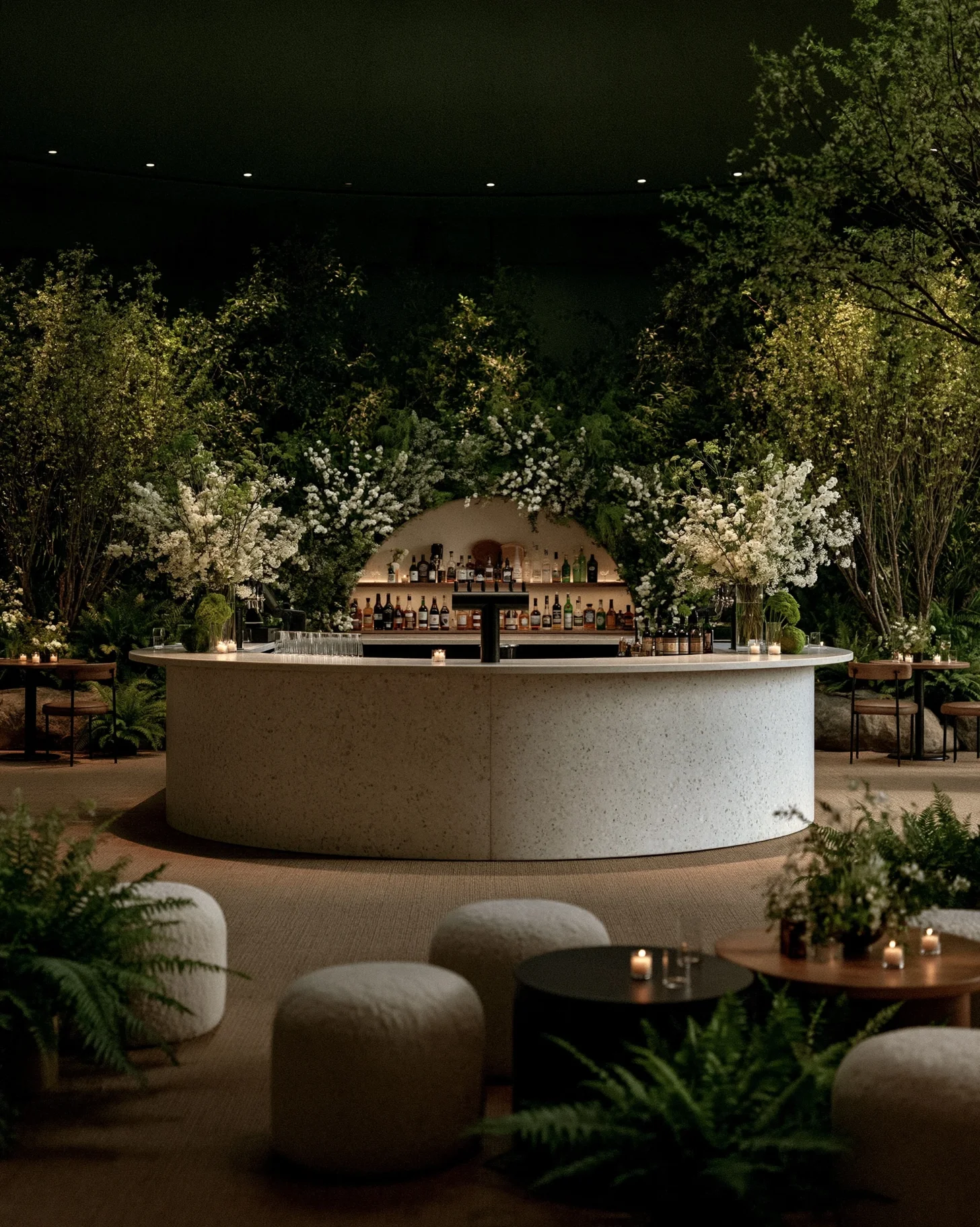
The Bar: A Statement Island Wrapped in Greenery
The bar is the design’s biggest swing. Rather than pushing a service bar against a wall, this setup uses an oversized double-sided island that guests can approach from every direction. Foliage spills across the top and down the sides. Warm low lighting rakes across the surface, and the whole structure glows against the dark room.
An island bar changes the social physics of a cocktail hour. Guests gather around all four sides instead of forming one long queue, which keeps energy distributed through the room. For this reason, island bars work best in wide-open floor plans where you have genuine circulation space on every side. In a narrow room, the same piece creates a bottleneck.
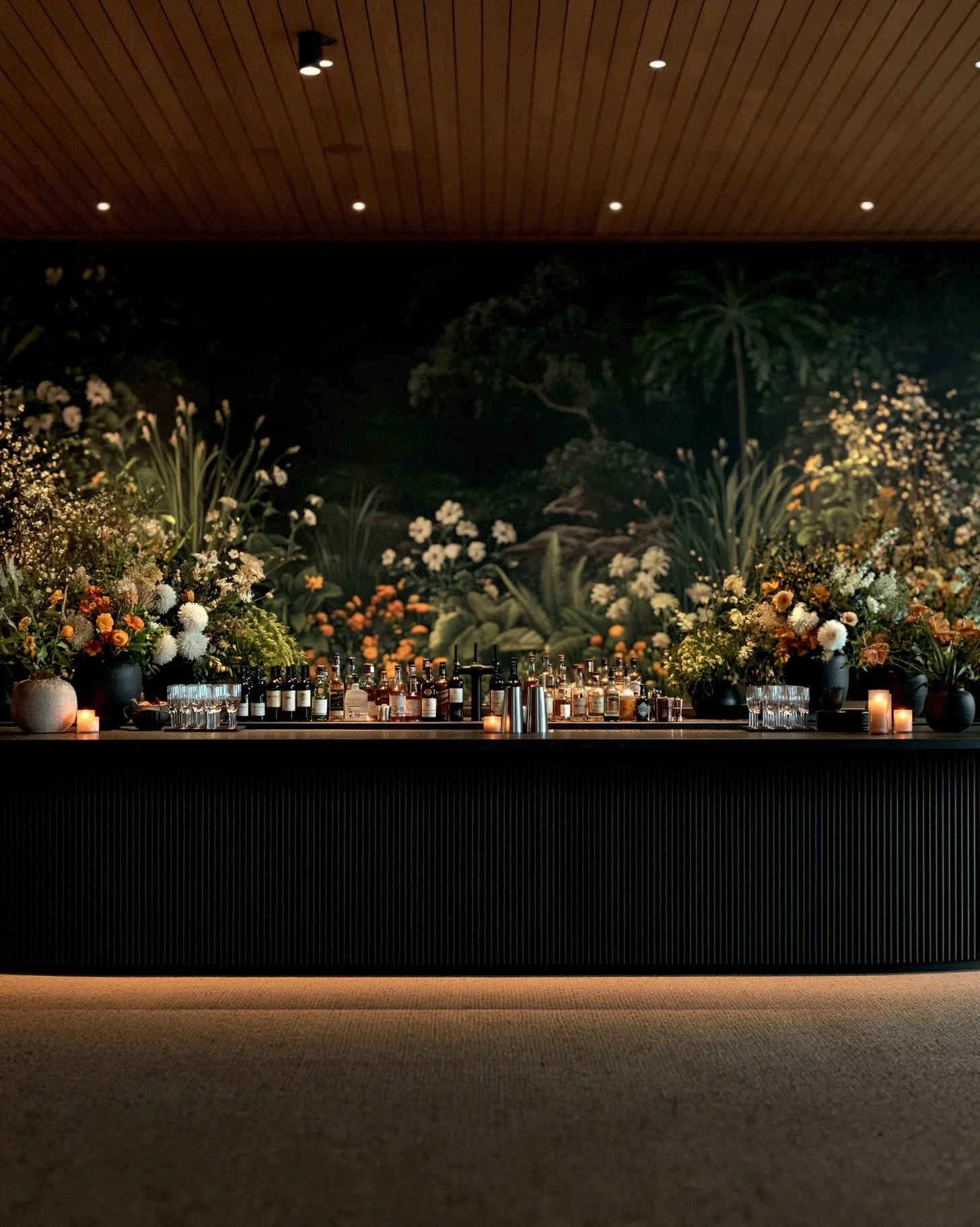
Notice how the countertop stays clear. That restraint matters more than it looks. Bartenders need working space, and a cluttered bar top reads as chaotic in photos no matter how pretty the styling is.
- Keep decor on the back and base of the bar. Leave the working surface functional and clean.
- Light the bar from within or below so the structure glows rather than casting shadows on faces.
- For a similar effect on a smaller budget, wrap a standard rental bar and let the greenery do the work. I broke this approach down further in my emerald green wedding ideas post.
Once cocktails wind down, the tables carry the concept into the reception.
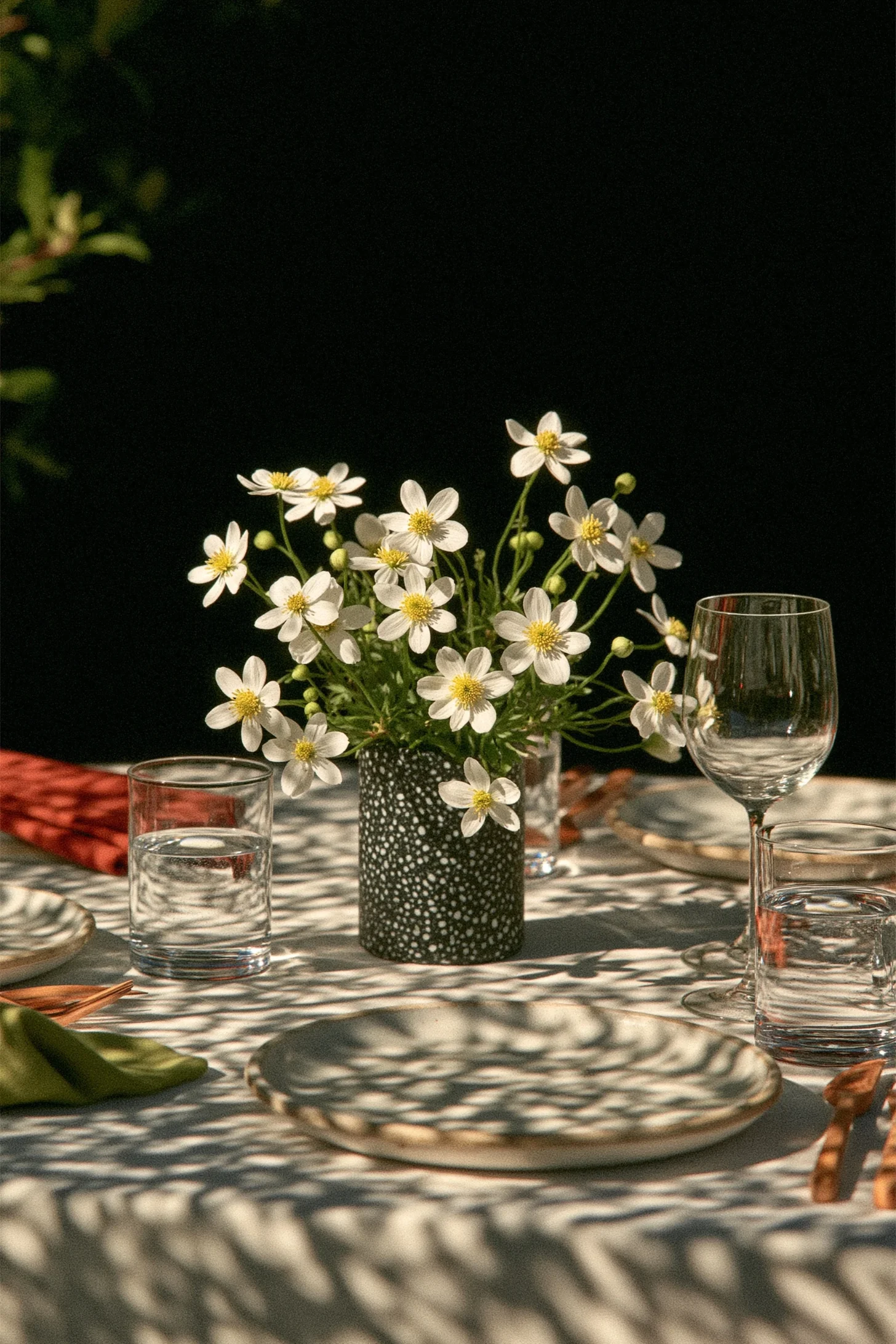
Reception Tablescapes in Deep Green, Ivory, and Candlelight
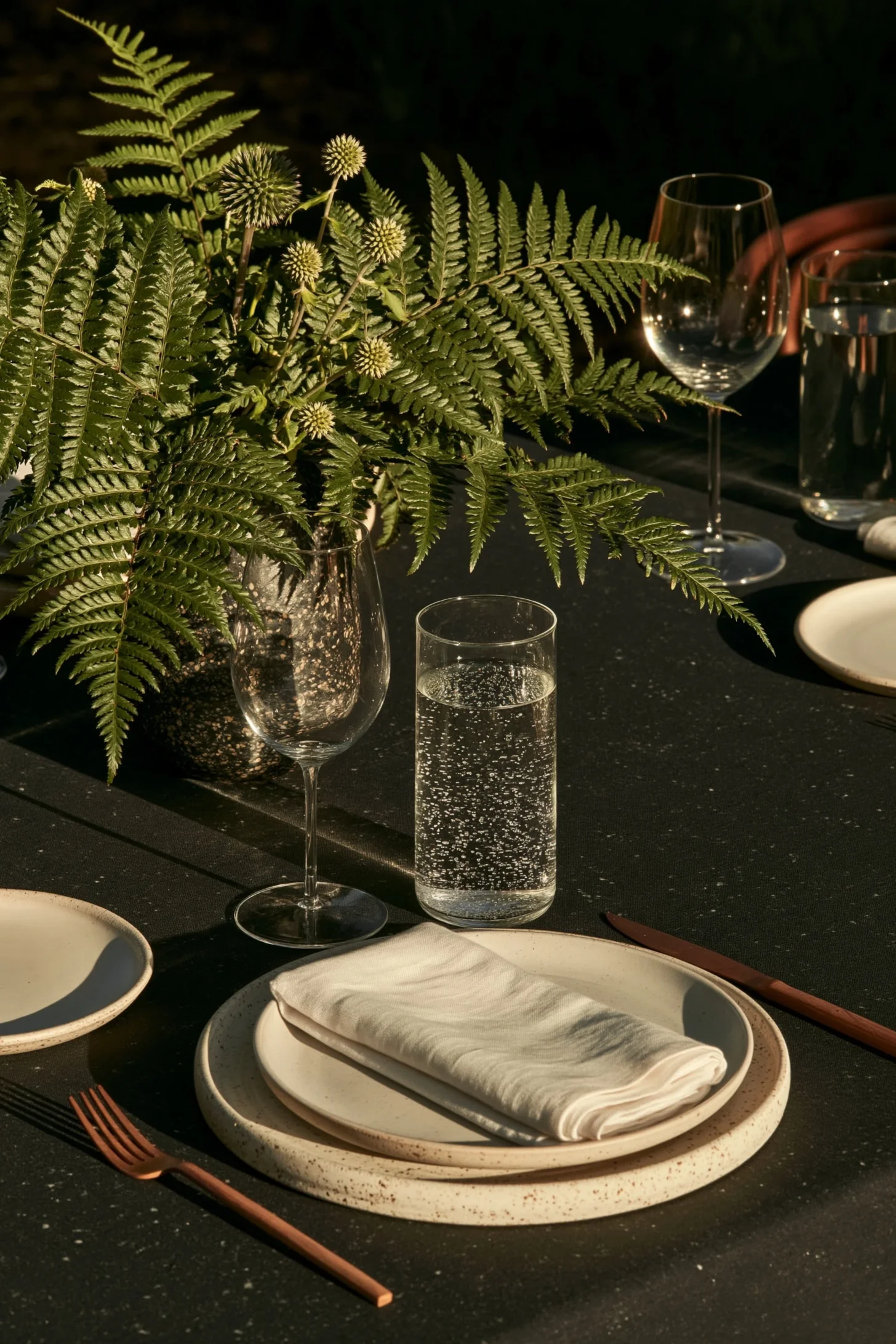
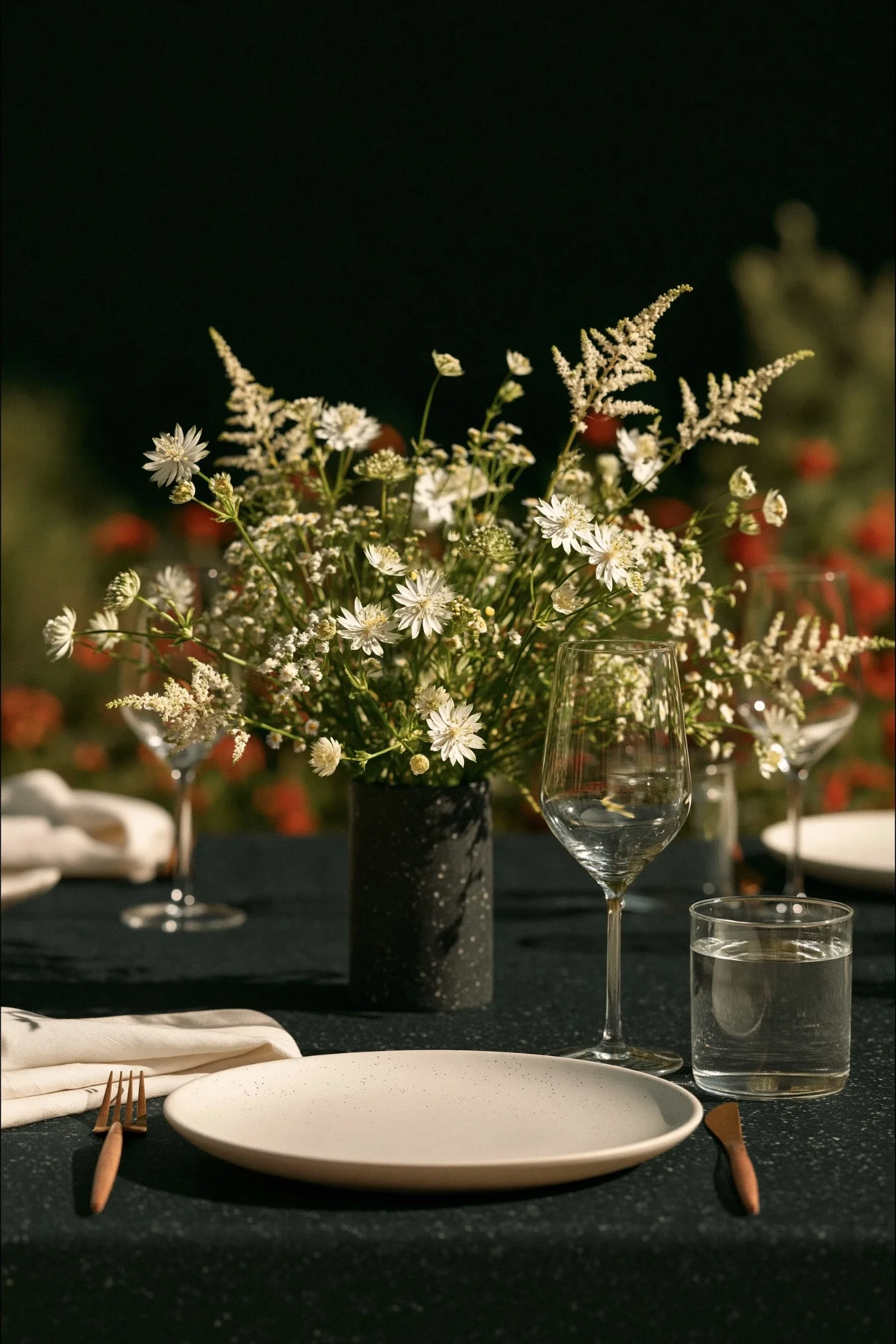
The tables are where the daisy motif turns from accent into signature. Each place setting sits on layered linens in dark green and charcoal, with low arrangements of fern and white daisies running the length. Glassware catches the candlelight. Beyond that, the styling stays deliberately restrained.
Low Centerpieces That Keep Conversation Open
Low arrangements do the heavy lifting here, and that is a practical choice as much as an aesthetic one. Guests can see across the table, which matters enormously at a seated dinner. When paired with a dark room, low centerpieces also keep the candlelight close to face level where it flatters everyone.
Texture Over Color Variation
Because the palette barely shifts, texture becomes the variable. You see it in the linen weave, the ruffled edges of the fern fronds, and the matte-versus-glossy contrast between ceramics and glass. This is a useful trick in any monochrome scheme. In particular, a single-color table only stays interesting if the materials disagree with each other.
- Count on roughly one candle per guest for a dark reception. It sounds excessive and it is not.
- Mix at least three textures per table — something woven, something glossy, something organic.
- Skip tall centerpieces entirely in a low-lit room. They block the light you worked hard to create.
The lounge is where the forest concept gets to relax.
Lounge Areas: Building a Destination, Not Filler Space
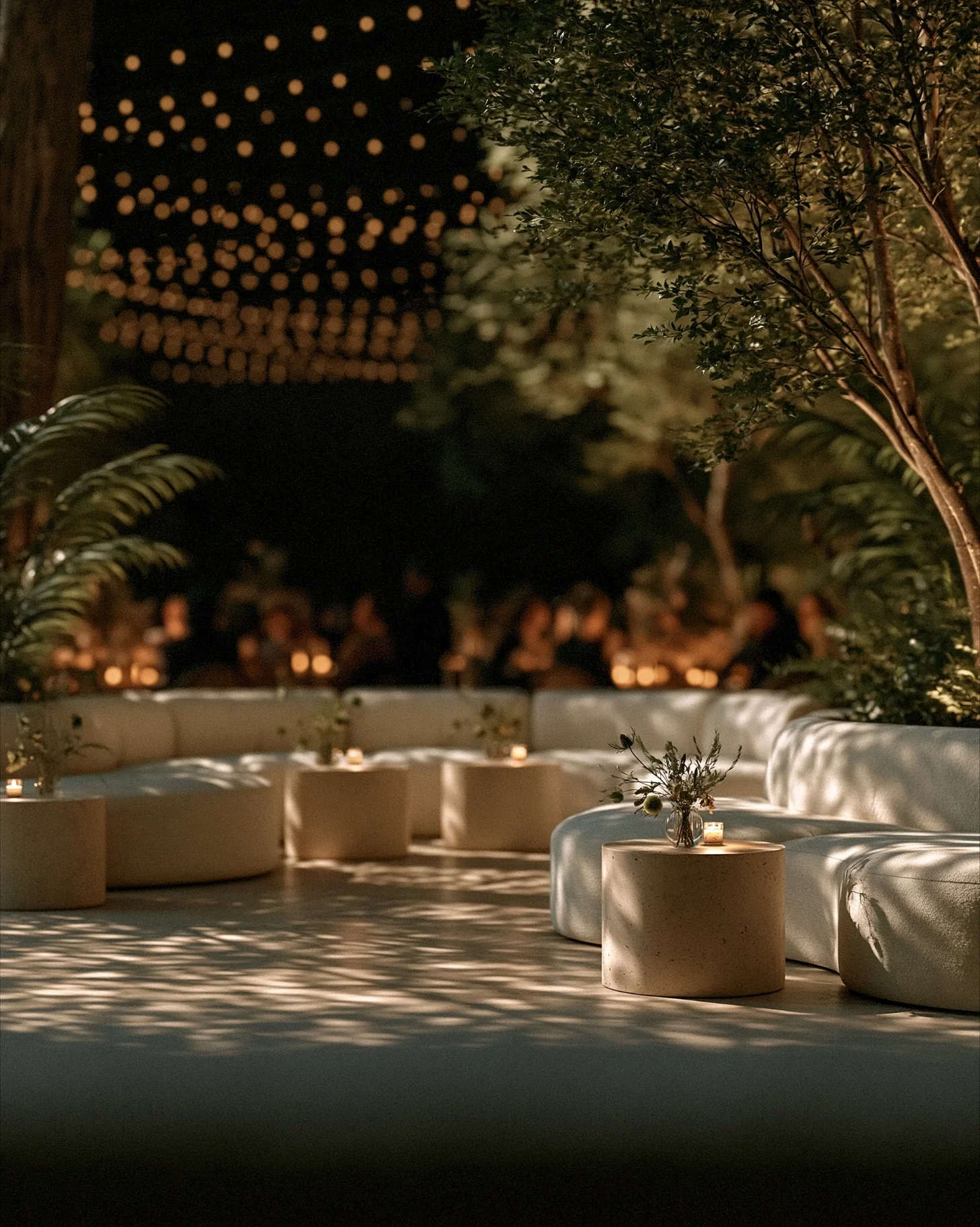
Two lounge treatments appear in this design, and they solve different problems. The first sits on an open event floor with rental sofas and low tables arranged as a genuine destination. Foliage surrounds it. Cocktail tables and warm lighting define the edges without walls.
A lounge only works when it feels intentional. Furniture pushed against a perimeter reads as leftover space, whereas a grouping placed confidently in the open reads as a designed room. That said, you need enough square footage to pull this off — an island lounge in a tight venue just blocks traffic.
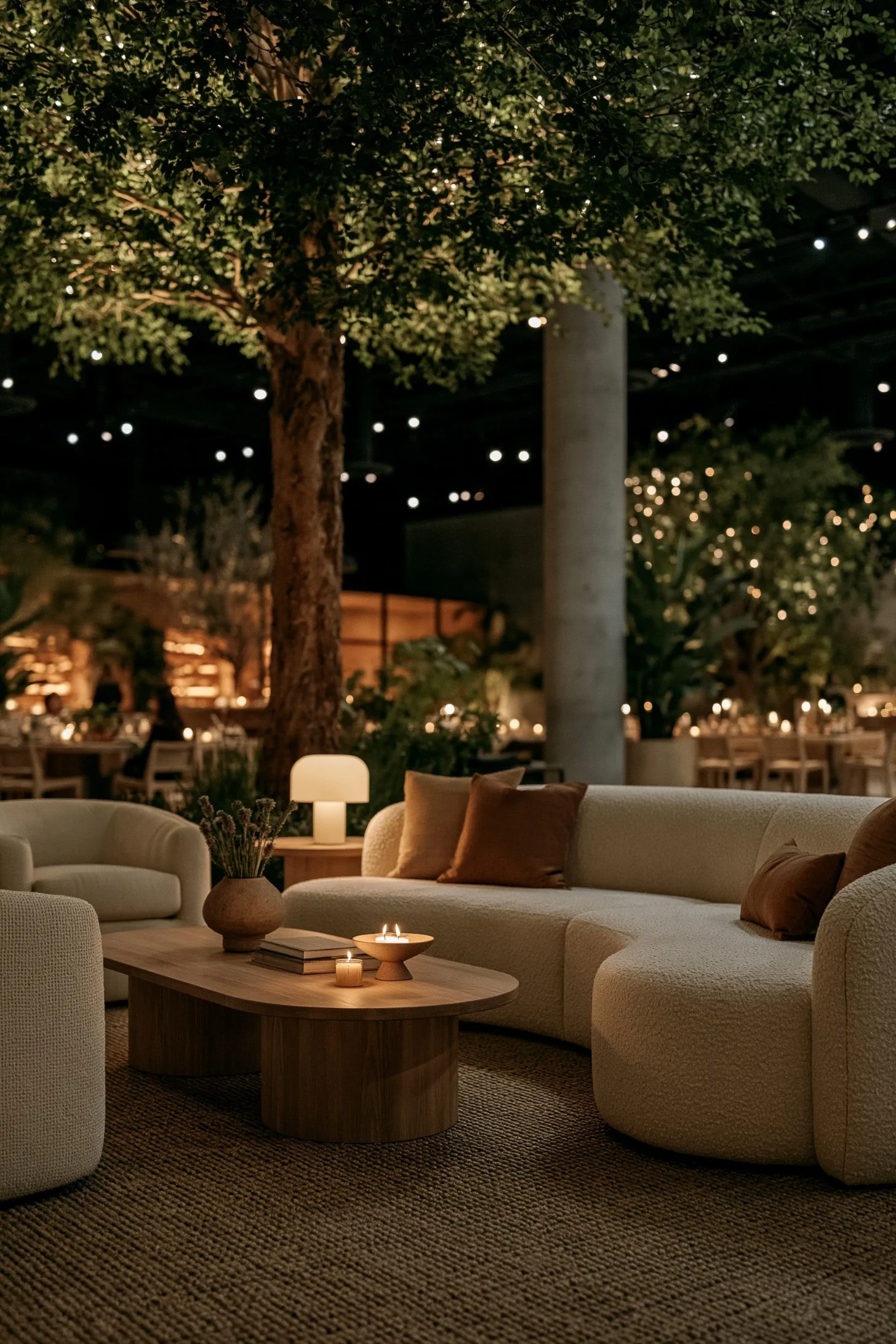
The second treatment tucks a tighter vignette into the larger reception. Layered seating, low tables, and candlelight create an intimate pocket. Meanwhile the party continues visibly around it, which is what keeps it from feeling isolated.
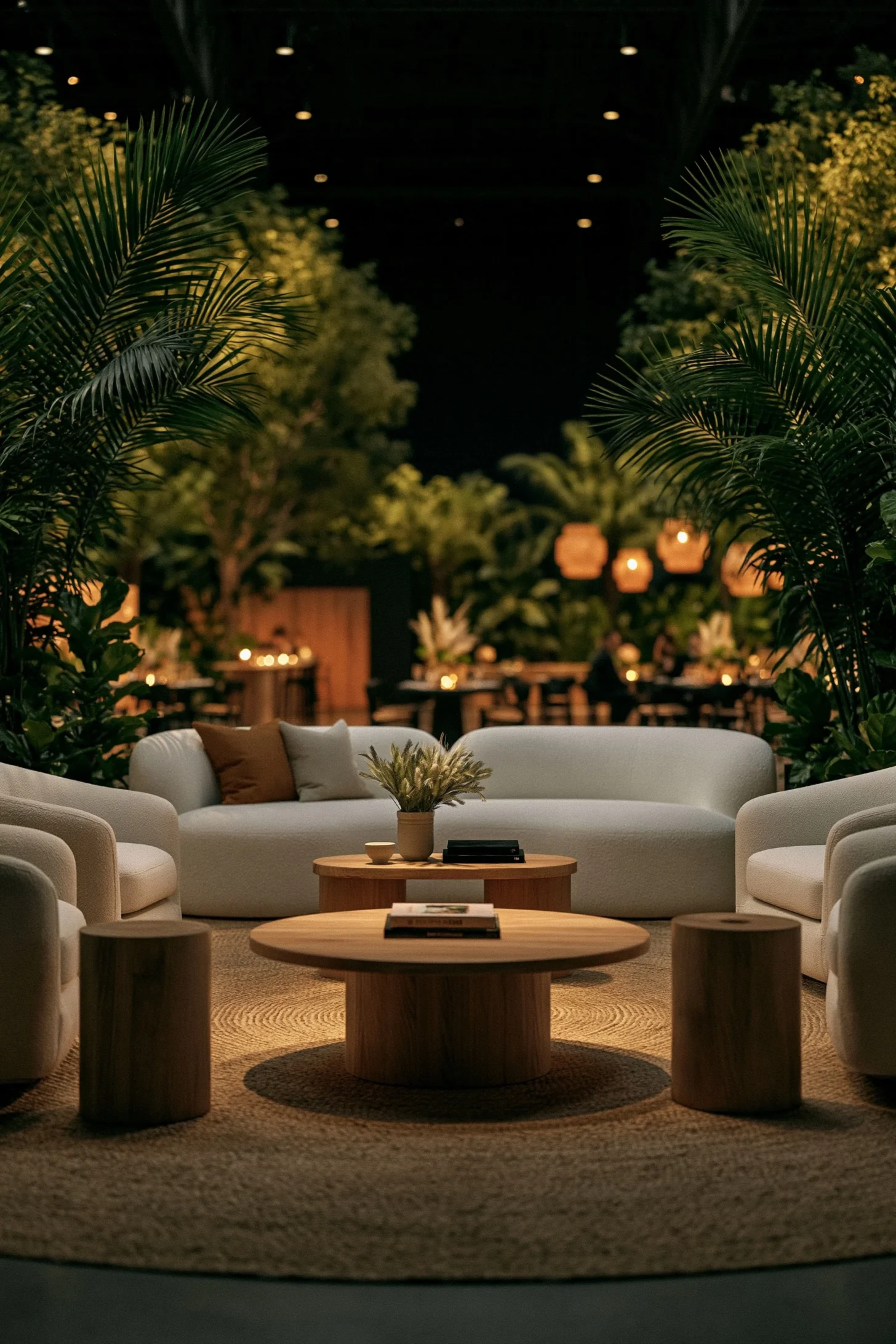
- Anchor every lounge with a rug. Without one, furniture on a dark floor looks like it is floating.
- Plan roughly one lounge seat for every eight guests. Any more and you lose dance floor energy.
- Light lounges lower than the dining areas. The dimmer pocket is what makes them feel like an escape.
Nearby, the photo moment gives the daisies their close-up.
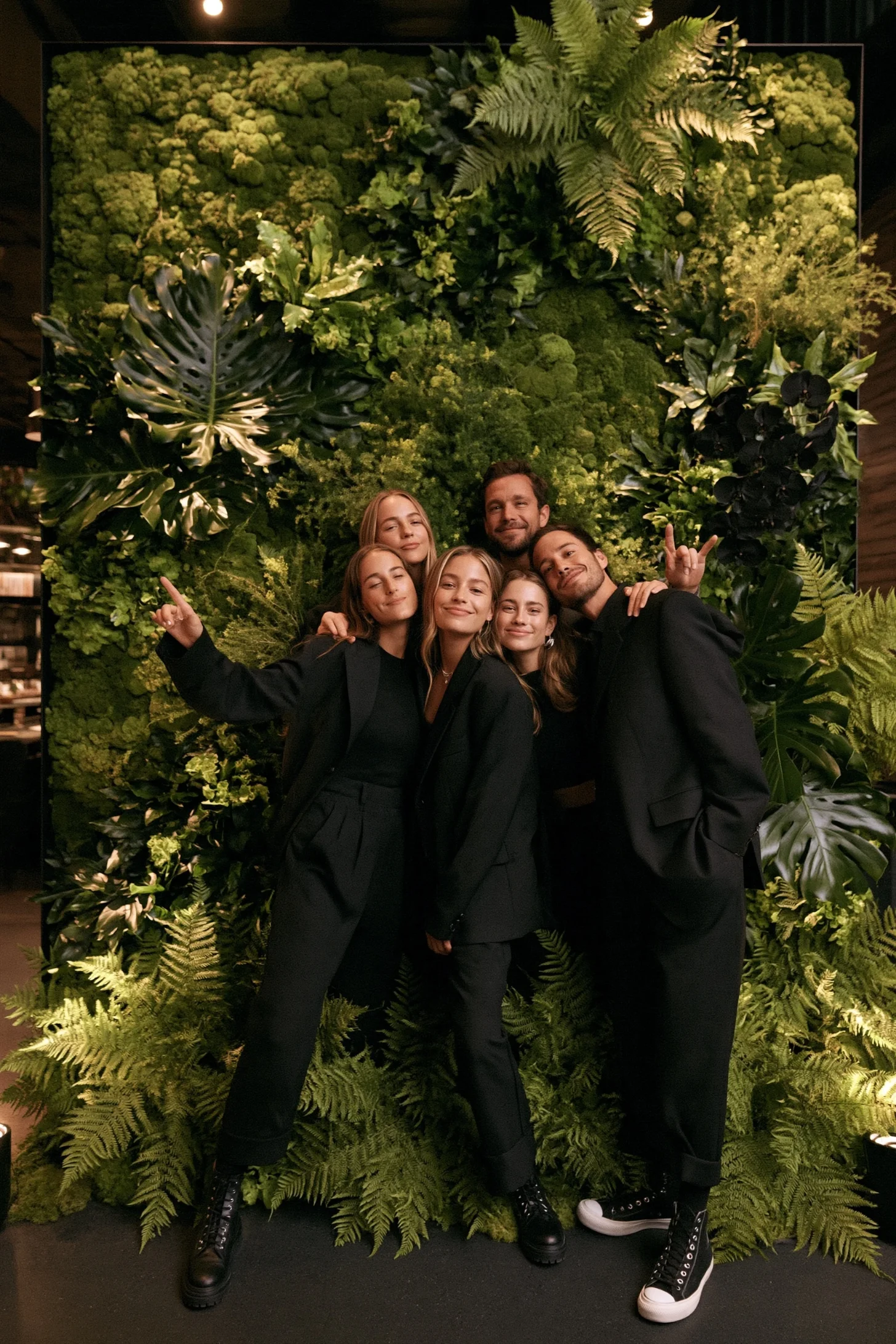
A Fern and Daisy Photo Backdrop Worth Queuing For
The photo backdrop takes the ceremony language and compresses it. A dense wall of fern and foliage sits behind guests, scattered with white daisies at exactly the density that reads well on camera. Guests pose in front of it with open floor at their feet.
Backdrops fail most often on scale. A wall that looks generous in a rendering frequently turns out too small once four people stand in front of it. From a production standpoint, plan for at least eight feet wide and seven feet tall if you want group shots rather than solo portraits.
- Build the backdrop wider than you think you need. Groups spread out more than couples do.
- Add a dedicated light aimed at faces, not at the greenery. Beautiful foliage and shadowed guests is a common mistake.
- Leave three to four feet of clear floor in front so photos do not feel cramped.
Step back, and the full room shows how the pieces cohere.
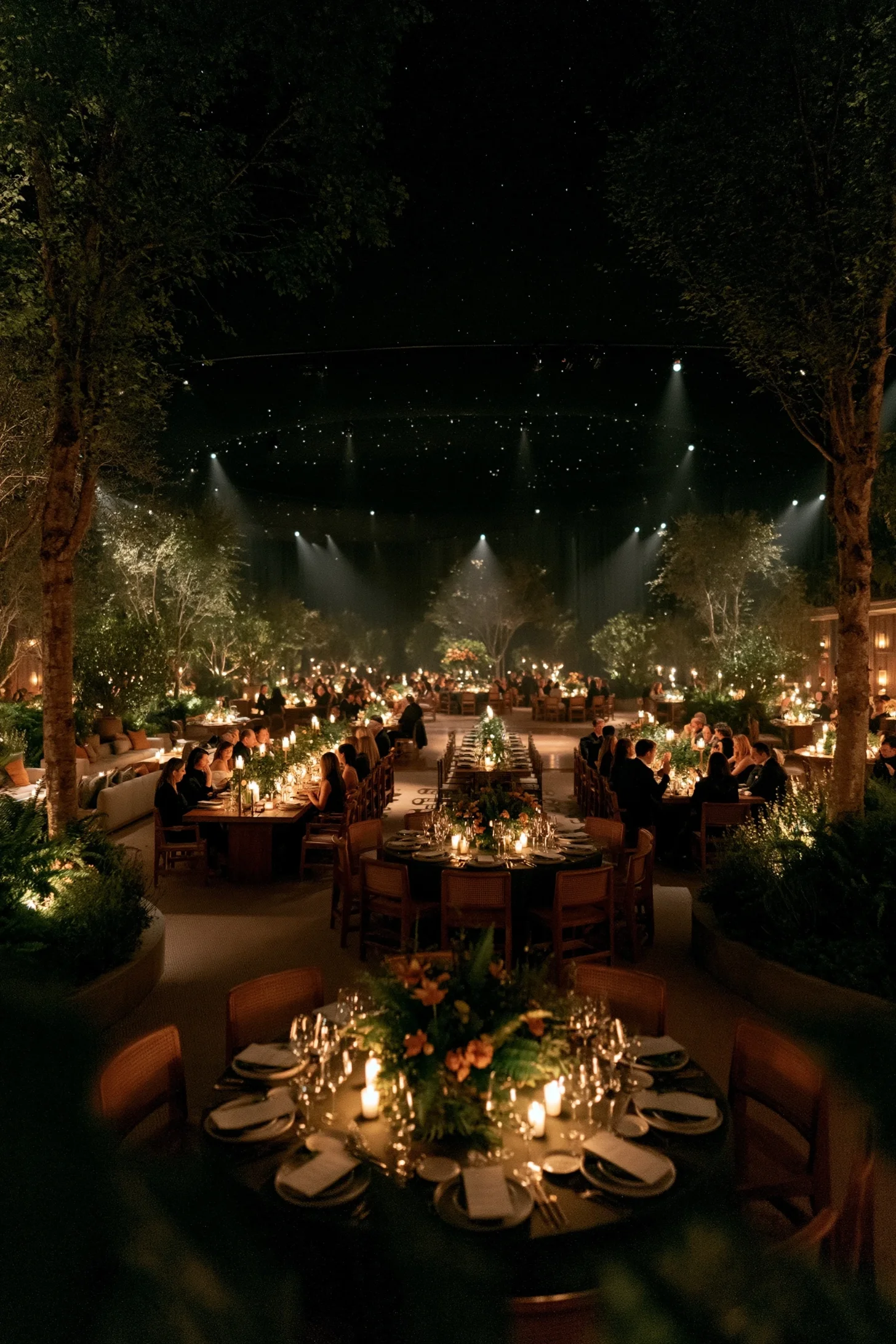
The Wide View: How a Dark Green Reception Holds Together
From an elevated vantage, the scale of the concept becomes clear. Trees and tall greenery break up the floor plan. Strings of market lights crisscross overhead, dropping a warm ceiling of light over the tables. Structural pillars fade into the dark, and the room reads as a clearing rather than a hall.
This is the payoff for committing to a single palette. Because nothing competes chromatically, the eye travels across the room on light alone. Overhead string lights are doing something specific here — they lower the perceived ceiling height and pull a cavernous space down to human scale. Consequently, a room that could feel cold instead feels enclosed and warm.
- Market lights read best when hung in a consistent pattern. Random draping looks accidental from above.
- Use trees and tall plants to break sightlines between zones. It makes a big room feel layered rather than empty.
- Budget lighting before florals if you have to choose. In a dark venue, lighting is the design.
Designer Notes on Working in a Dark Palette
Dark weddings intimidate people, usually for the wrong reasons. The common worry is that guests will not be able to see, but the real risk is flatness. When everything sits in the same tonal range, a room can lose all depth and read as a void.
The fix is layering light at three heights. Candlelight at table level, lit installations at standing height, and string lights overhead give the eye something to travel between. Similarly, the white daisies function as visual punctuation throughout — small bright points that keep the green from collapsing into a single mass. If you want to see how a restrained palette handles a raw venue, my black and white industrial event uses a similar logic with a completely different color story.
Save your favorite looks from this post to Pinterest so you have them handy when you start planning your own palette.
Why a Forest Green Nighttime Wedding Works So Well
This design succeeds because the two halves need each other. Deep green and charcoal supply the drama, atmosphere, and sense of occasion. The ferns and white daisies supply softness, romance, and the lightness that keeps it from feeling severe. Neither element would carry a wedding on its own.
It also solves a real problem for couples drawn to moody design. Dark palettes can tip toward Halloween or toward something austere and cold. Here, the botanical layer keeps everything firmly romantic while the darkness keeps it from reading like a garden party. For a look with a sharper, more sculptural take on green, my jade and emerald art gallery wedding pushes the same color family in a very different direction.
Above all, this concept proves that a nearly monochrome wedding can still feel abundant. The abundance simply comes from texture, foliage, and light rather than from color.


